Source Industrial Pneumatic Coil Nailer for Roofing, Framing, and Decking
Find and compare 30 industrial pneumatic coil nailer models from Tianjin manufacturers. Evaluate specifications such as 70-120 psi operating pressure, aluminum body construction, and compatibility with 15° flat wire welded coil nails for wood pallet and siding applications.
Key considerations
Products List


Comprehensive Sourcing Guide
Industrial Pneumatic Coil Nailer Sourcing Guide
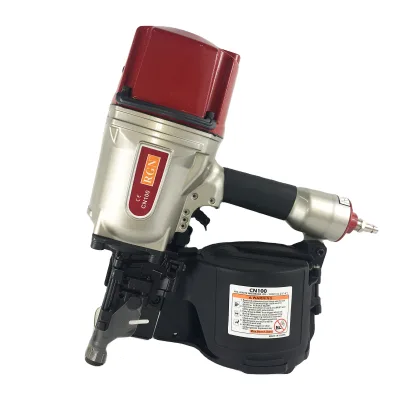
Procuring an industrial pneumatic coil nailer requires a precise understanding of the tool's operational mechanics and its specific fit within high-volume construction workflows. The core of this equipment lies in its ability to drive 15° flat wire welded coil nails efficiently, a capability observed in models designed for applications ranging from roofing and siding to heavy framing and decking. Buyers must recognize that these tools are engineered for semi-automatic operation, utilizing a sequential trigger mechanism to ensure safety and precision during rapid firing cycles. The distinction between a general-purpose nailer and an industrial-grade unit often rests on the durability of the aluminum body and the consistency of the driving force, which is critical for maintaining productivity on large-scale projects.
When evaluating the market, procurement teams should focus on the specific configuration of the nail gun, as the observed product range includes models with varying magazine capacities and shank types. The available inventory features tools capable of handling smooth, ring, and screw shank nails, with shank diameters typically ranging from 2.1 mm to 2.3 mm. This versatility allows the equipment to adapt to different wood packing and carpentry needs, but it also necessitates a careful review of the specific model number, such as the CN45, CN55, or CN100 series, to ensure compatibility with the intended fastener type. Understanding these variations is the first step in aligning the tool's physical specifications with the demands of the job site.
Product Scope and Observed Listing Signals
The observed product listings for industrial pneumatic coil nailers reveal a distinct range of operational parameters that define their suitability for various construction tasks. These tools are consistently described as being in new condition, with a working pressure requirement between 70 and 120 psi, indicating a need for a robust compressed air supply to function correctly. The physical dimensions of the units vary significantly, with some models measuring approximately 270mm in length while others extend to 335mm, a factor that influences operator fatigue and maneuverability in tight spaces. Buyers should verify that the listed dimensions and weight, which can range from 2.68 kg to 2.88 kg, align with the ergonomic requirements of their workforce.
Listing signals also highlight the customization availability and the diverse color options, including red, yellow, and blue, which may serve as branding identifiers or safety markers on a job site. The packaging structure is another critical signal, with units often shipped in a box and carton configuration, sometimes containing four packs per box, which impacts logistics and storage planning. Furthermore, the presence of samples in the market suggests that buyers can request physical units for testing before committing to a bulk order, a practice that mitigates the risk of purchasing equipment that does not meet specific performance expectations. These signals collectively paint a picture of a mature market where product differentiation is based on model capacity, weight, and specific application focus.
Technical Specifications to Verify
Verifying the technical specifications of the nailer is paramount to ensuring that the tool can handle the intended load capacity and fastener types without failure. The load capacity for these units is observed to range between 250 and 400 nails, a metric that directly correlates with the magazine size and the efficiency of the feeding mechanism. Buyers must confirm the exact model standard, such as CN57 or CN80, as these designations often dictate the maximum nail length and the specific shank diameter the tool is engineered to accept. The shank diameter specifications, which can vary from 0.083 inches to 0.099 inches, must match the fasteners being used to prevent jamming or misfires during operation.
In addition to capacity and dimensions, the internal mechanics of the nailer require close scrutiny, particularly regarding the trigger type and jam clearing features. The sequential trigger is a standard safety feature observed in these listings, ensuring that the tool fires only when the nose is pressed against the work surface and the trigger is pulled, reducing the risk of accidental discharge. The tool-free jam clearing mechanism is another critical specification that minimizes downtime, allowing operators to quickly resolve blockages without the need for specialized tools or extensive disassembly. Confirming that the body is constructed from aluminum and that the shank types (smooth, ring, or screw) are compatible with the specific nail coil is essential for maintaining the tool's longevity and performance.
Compliance and Safety Documentation
While the product listings indicate a business type that includes both manufacturing and trading, the absence of explicit certification data in the provided facts necessitates a rigorous verification process for compliance and safety. Buyers should request documentation confirming that the equipment meets relevant international safety standards, as the observed certification field lists "ISOCE," which may refer to a specific compliance framework but requires validation against the buyer's local regulatory requirements. The HS code 84671900 identifies the product category, but it does not guarantee adherence to specific safety protocols, making it imperative to ask for test reports or safety manuals that detail the operational limits and risk mitigation strategies.
Safety documentation must also address the operating pressure range and the mechanical safeguards inherent in the design. Since the tools operate within a 70-120 psi range, the supplier should provide clear guidelines on the required air compressor specifications to prevent over-pressurization, which could lead to equipment failure or injury. The sequential trigger mechanism is a key safety feature, but its effectiveness depends on proper maintenance and the integrity of the safety nose. Procurement teams should ensure that the supplier provides a comprehensive user manual that covers safe handling procedures, maintenance schedules, and emergency protocols, particularly for tools used in high-volume environments like wood pallet manufacturing or large-scale roofing projects.
Cost Drivers and Commercial Terms
The cost of an industrial pneumatic coil nailer is influenced by several factors, including the model complexity, material quality, and the specific configuration of the fastener system. The observed price range of 2 to 680 USD suggests a wide disparity in value, likely driven by differences in build quality, brand reputation, and the inclusion of accessories or extended warranties. Buyers must analyze whether the lower price points correspond to basic models with limited capacity or if they reflect promotional pricing for standard units. Understanding the cost drivers requires a detailed comparison of the load capacity, weight, and dimensions against the price, ensuring that the selected tool offers the best value for the specific application intensity.
Commercial terms, such as the minimum order quantity (MOQ) and packaging details, play a significant role in the total cost of ownership. The observed MOQ range of 1 to 200 units indicates flexibility for both small-scale buyers and large distributors, but the specific MOQ for a desired model must be confirmed before negotiation. Packaging is another cost factor, as the standard unit packaging of one pack per unit or four packs per box affects shipping efficiency and potential damage during transit. Buyers should also consider the availability of samples, which may incur additional costs but provide a critical opportunity to validate the product before a larger commitment, ultimately reducing the risk of costly procurement errors.
Supplier Qualification and Quality Control
Qualifying a supplier for industrial pneumatic coil nailers involves assessing their business type and their ability to maintain consistent quality across their product line. The observed data identifies suppliers as both manufacturers and trading companies, a distinction that impacts the level of control over the production process and the ability to offer customization. Manufacturers typically have direct oversight of the assembly and testing phases, which can lead to more consistent quality and faster response times for technical issues. Trading companies, while offering a broader range of products, may rely on third-party manufacturers, requiring buyers to verify the actual source of the goods and the quality control measures in place at the production facility.
Quality control checks should focus on the consistency of the product attributes, such as the aluminum body construction, the precision of the shank diameter, and the reliability of the sequential trigger. Buyers should request evidence of the supplier's quality assurance processes, including in-line testing and final inspection protocols, to ensure that every unit meets the specified standards. The availability of samples is a strong indicator of a supplier's confidence in their product, allowing buyers to conduct physical tests on the tool's performance, durability, and ease of use. Establishing a clear communication channel for quality feedback and ensuring that the supplier is responsive to any defects or performance issues is essential for a successful long-term partnership.
Long-Term Procurement Checks
Sustaining a successful procurement relationship for industrial pneumatic coil nailers requires ongoing monitoring of the tool's performance and the supplier's ability to support long-term needs. Buyers should establish a schedule for regular maintenance checks, focusing on the wear and tear of the trigger mechanism, the condition of the aluminum body, and the integrity of the air hose connections. The semi-automatic nature of these tools means that they are subject to high usage rates, making it crucial to have a reliable supply of replacement parts and consumables, such as specific nail coils and O-rings. A proactive approach to maintenance can significantly extend the lifespan of the equipment and reduce the frequency of costly downtime.
Long-term procurement also involves evaluating the supplier's adaptability to changing market demands and technological advancements. As construction techniques evolve, the demand for nailers with different capacities or shank types may shift, requiring a supplier who can offer updated models or customized solutions. The observed customization availability suggests that suppliers are capable of adapting their products, but buyers should verify the lead times and costs associated with these customizations. Additionally, maintaining a relationship with a supplier that offers a robust after-sales support system, including technical assistance and warranty services, is vital for ensuring that the procurement strategy remains effective and responsive to the dynamic needs of the construction industry.
FAQs
What certifications does the industrial pneumatic coil nailer have?
The industrial pneumatic coil nailer holds ISOCE certification, ensuring compliance with recognized quality management standards for manufacturing processes. This certification indicates that the production facility adheres to strict international protocols for consistency and reliability. Buyers can rely on this credential when evaluating supplier capabilities and product safety for professional construction and carpentry applications.
How much does an industrial pneumatic coil nailer cost?
The observed price range for these tools spans from 2 to 680 USD, depending on the specific model and configuration selected. Prices vary based on features such as shank type, load capacity, and included accessories. This wide range allows buyers to find options suitable for both budget-conscious projects and high-volume industrial operations requiring durable, semi-automatic performance.
What is the minimum order quantity for these nailers?
The minimum order quantity ranges from 1 to 200 units, offering flexibility for both sample testing and bulk procurement. This range accommodates small businesses seeking single units for evaluation as well as large contractors requiring substantial inventory. Buyers can negotiate specific MOQs based on their volume needs and the supplier's production capacity for customized or standard configurations.
Can the industrial pneumatic coil nailer be customized?
Yes, customization is available for these pneumatic tools, allowing buyers to tailor specifications to specific project requirements. Options may include color variations such as red, yellow, or blue, and specific shank types like smooth, ring, or screw shanks. This flexibility ensures that the equipment meets precise operational needs for siding, roofing, or framing tasks.
Where are these industrial pneumatic coil nailers manufactured?
These tools are originally manufactured in Tianjin, China, a known hub for industrial hardware production. The origin indicates the supply chain location and helps buyers assess logistics and shipping requirements. Understanding the manufacturing base is crucial for evaluating lead times, import regulations, and the overall reliability of the supply source for global procurement.
What is the operating pressure for this pneumatic nailer?
The operating pressure for this industrial pneumatic coil nailer is between 70 and 120 psi. This range ensures optimal performance for driving nails in various wood packing and construction applications. Users must ensure their air compressor can maintain this pressure to achieve consistent results and prevent jamming, which is designed to be cleared tool-free for efficiency.